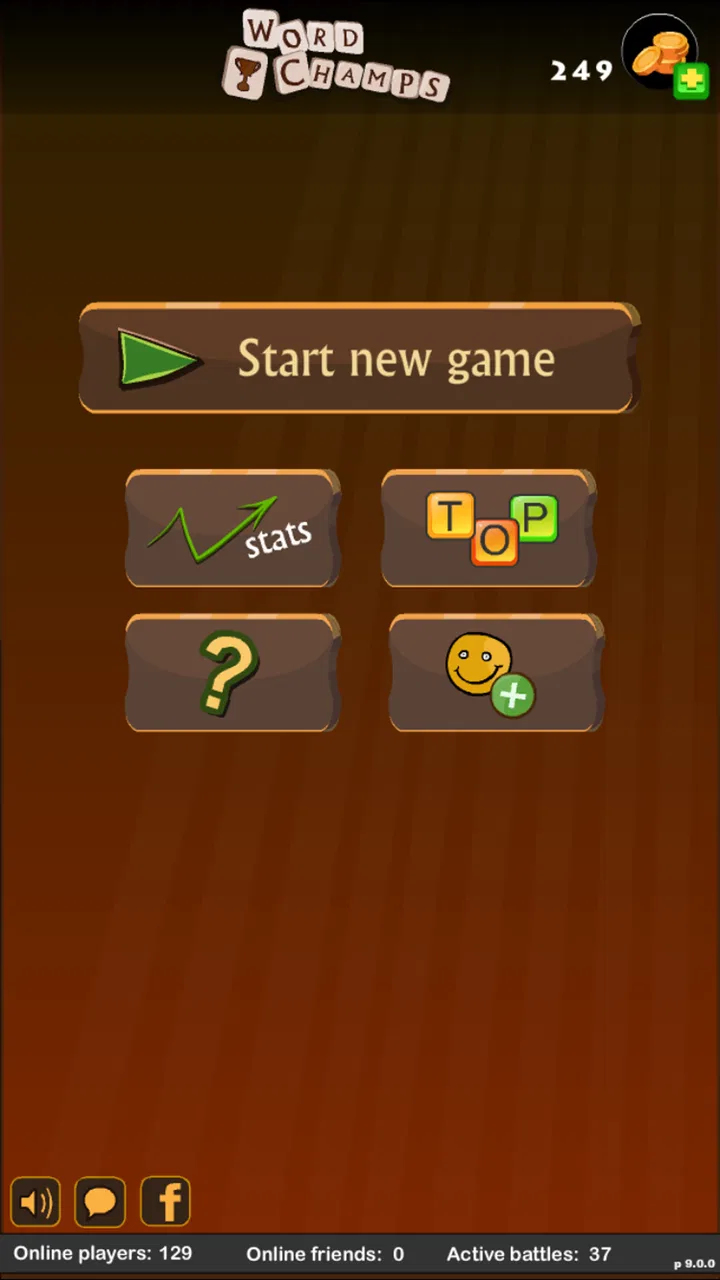
Word Champs
- 4.4
- Rating
- 10.00K
- Installs
- Free
- Price

 Analysis by App-foxy
I found Word Champs most interesting when I stopped treating it like a simple vocabulary exercise. It is a free word game from SIA Fufla, built around real-time play and quick strategic decisions rather than quiet, unlimited puzzle solving. That difference matters: the game can feel lively and competitive, but it also asks you to read, think, and act while the match is moving.
My overall impression is positive, especially for people who enjoy word games but want more pressure than a standard crossword or a relaxed anagram app. It is also a fairly approachable choice for casual sessions, since the content rating is Everyone and the minimum operating-system requirement is Android 5.0. Still, the real-time format will not suit every player. If you prefer complete control over your pace, or if visual concentration and rapid input are difficult for you, some of the usual turn-based alternatives may be a better fit.
How the game feels to read and navigate
The basic appeal is easy to understand. You enter a word-game environment where vocabulary is only part of the challenge; timing and tactical judgment also influence how well you perform. I like that combination because it gives familiar word play a stronger sense of purpose. Finding a possible word is one thing, but deciding whether it is worth using immediately is another.
You May Also Like

 Pandora - Music & Podcasts
Pandora’s Music Is Easy to Start, but Harder to Recover
Pandora’s strength is its low-effort path from a seed to a station. Its weak spot is how much confidence it asks you to place in connection, setup, and quiet recovery.

 8 Ball Pool
 Is Built on Rivalries, Rematches, and Routine
A close look at the rivalries, rematches, shared routines, and unanswered safety questions that turn a quick pool match into a persistent mobile community.

 Samsung Music
’s Quiet Strength Is Playing What You Already Own
Its reach comes less from spectacle than from dependable access to a personal library. That simplicity is both the app’s strongest retention engine and its ceiling.

 AccuWeather: Weather Radar
AccuWeather Review: A Quick, Clear Forecast for Everyday Decisions
For everyday plans, the best forecast is the one you can understand quickly. AccuWeather makes rain timing, radar, and local conditions easy to act on, with a few trade-offs.

 Hill Climb Racing
Why Hill Climb Racing Still Turns Crashes Into One More Run
A tiny car, a bumpy hill and one more upgrade: Hill Climb Racing keeps resurfacing because its simple chaos makes every near-miss feel personal.

 AliExpress - Shopping App
AliExpress Makes Global Shopping Feel Personal, but Shoppers Bear the Risk
AliExpress turns a global marketplace into a pocket-sized discovery engine. Its reach is useful, its shopping loop compelling, and its trade-offs easy to miss.
More From Our News Desk
View All News


That real-time structure changes the way I read the screen. I am not simply scanning for a correct answer at my leisure. I am checking the available letters or opportunities, judging what seems useful, and keeping an eye on the flow of the match. For players with strong visual scanning skills, this creates satisfying momentum. For others, it can make the interface feel demanding, particularly during a close contest.
Navigation is easiest when I approach the game with a clear plan. I prefer to spend the first moments understanding the current board or challenge instead of tapping at random. In a word game with strategic pressure, careless early moves can make the rest of a round feel unnecessarily difficult. A short pause to identify the most promising area is often more useful than immediately choosing the first recognizable word.
One practical habit is to separate “words I can see” from “words that help me.” That sounds obvious, but the distinction is important here. A player who focuses only on vocabulary may miss the positional or timing value of a move. I found that reading the whole play area before committing helped me avoid tunnel vision, especially when several possible words competed for attention.
The game’s public reception suggests that this approach works for a sizeable group of players. It holds an average rating of 4.4 from roughly 600 ratings, with more than 100 written reviews, and it has passed 10,000 installs. Those figures do not make the experience universally suitable, but they do indicate that Word Champs has found an audience beyond a tiny experimental release.
Useful habits for clearer play
For someone trying it for the first time, I would recommend playing a few early rounds as observation sessions. Instead of measuring success only by the result, notice how quickly the board changes, how much reading is required, and whether your attention is comfortable under pressure. This is a better test of fit than deciding from the store summary alone.
I also found it helpful to keep my attention moving in a consistent pattern: scan broadly, identify a small number of candidates, then choose one. Repeatedly jumping between unrelated areas can make a fast word game feel more confusing than it needs to be. This is not a hidden setting or a special mode; it is simply a workflow that makes the existing design easier to handle.
That workflow can be especially useful for younger players or anyone still building confidence with word games. It turns the experience into a lesson in visual organization as much as vocabulary. At the same time, I would not describe it as a dedicated educational tool. The game rewards recognition and decision-making, but it does not replace structured language practice, spelling instruction, or a dictionary.
Motor and sensory considerations during real-time matches
The most important accessibility question is speed. Real-time play naturally favors players who can read the screen, decide, and enter a response without much delay. That does not automatically exclude people with different abilities, but it does create a barrier that is less noticeable in turn-based word games. If you need extra time to process visual information or make precise taps, the pressure may affect enjoyment even when you understand the words perfectly.
I would therefore approach this game differently depending on the player. Someone with mild difficulty managing rapid choices may still enjoy it by treating matches as practice rather than competition. A player who needs a slower pace, larger visual targets, spoken guidance, or extensive customization should first consider whether the device and game presentation are comfortable in actual use. I would not assume that a general mobile interface provides those adjustments automatically.
For visual comfort, the key issue is sustained scanning. Word games can become tiring when the player repeatedly searches a busy area for letter combinations. I found that playing in a well-lit environment and holding the phone at a stable distance made more difference than trying to rush. Short sessions are also sensible. Once concentration drops, the strategic element becomes less enjoyable and mistakes start to feel like interface problems even when they are really fatigue.
Players who are sensitive to motion, sound, or visual urgency should also test the game in a calm setting before committing to longer sessions. I cannot treat every device presentation as identical, because screen size, brightness, system text settings, and audio behavior vary between phones. What I can say is that the real-time design itself creates urgency, so anyone who finds rapid visual change uncomfortable should be cautious.
Motor control is another practical consideration. The experience depends on selecting or entering choices quickly enough for the match to remain competitive. A player using one hand may find certain positions easier than others, while someone who relies on a particular grip or input method may need to adjust how they hold the phone. A stable surface can help during focused play, although that makes the game feel less like a spontaneous one-handed pastime.
Who may find it comfortable
I think Word Champs is most comfortable for players who can read short pieces of information quickly, make a decision under mild pressure, and use ordinary touchscreen input without needing extensive adaptation. It can work well for a family member who enjoys vocabulary challenges, a student looking for a brief mental break, or a word-game fan who wants more urgency than a daily puzzle provides.
It may also suit people who dislike long tutorials or complicated game systems. The central idea is direct: words matter, but the moment and the choice matter too. That simplicity makes it easier to explain to a friend than a larger strategy game with several layers of menus and resources.
However, simplicity should not be confused with low demand. A clean concept can still require fast visual processing. Players with dyslexia, limited dexterity, low vision, attention differences, or sensitivity to competitive pressure may have very different experiences. Some may enjoy the challenge with personal adjustments; others may be better served by a slower word app that offers stronger control over pace and presentation.
Using it in everyday situations
The best everyday use I found is a short, focused session when I want something more active than scrolling but less involved than a full game. For example, I can imagine opening it during a break, playing a few rounds, and then putting the phone away without needing to remember a large story or complicated inventory. That makes it easier to fit into an irregular schedule.
It can also work as a friendly shared activity. Two people who enjoy language may compare their approaches after a match: one person might prioritize a safe word, while another waits for a more valuable opportunity. The strategic layer gives those conversations more substance than simply asking who knows the most vocabulary. It is not just a test of word knowledge; it is a test of judgment under a clock.
On the other hand, I would avoid using it as a relaxation tool immediately before sleep if competitive urgency keeps your mind active. A quiet crossword, word search, or untimed anagram game is usually better for that purpose. The distinction is important because all of these belong to the broad word-game category, but they serve different moods.
It is also worth considering the environment. On public transport, in a noisy waiting room, or while multitasking, a real-time match may be less enjoyable because attention is divided. A player can understand the challenge and still perform poorly simply because the surroundings interrupt concentration. For situational access, this is one of the game’s main trade-offs: it is convenient to carry, but not equally convenient to play everywhere.
The free entry point helps with trying it casually. I can install it without paying up front and decide whether the pace suits me. There are in-app purchases ranging from $0.99 to $49.99 per item, so I would be careful around optional spending, particularly if children use the device. The game remains easy to sample, but “free” does not mean every possible purchase is irrelevant to the overall experience.
How it compares with slower word games
Compared with a crossword, Word Champs is less about carefully developing one answer and more about reacting to a changing competitive situation. A crossword is usually better for quiet concentration, clues, and patient deduction. Compared with a traditional word search, this game offers more decision pressure and less of the soothing repetition that makes word searches appealing.
It also differs from turn-based word battles. Those alternatives give each player more time to inspect the board, consider unusual vocabulary, or accommodate slower input. Word Champs is the stronger choice when I want energy and immediacy. A turn-based option is preferable when fairness depends on giving every player room to think at their own pace.
Against a dictionary or vocabulary-learning app, the difference is even clearer. This game may encourage me to notice patterns and expand my awareness of possible words, but its main reward is successful play, not a structured explanation of definitions or grammar. If my goal is language study, I would use a learning app alongside it rather than expecting this game to provide lessons.
Where the remaining barriers appear
The largest barrier is the combination of speed and visual search. That combination can make the game feel less inclusive than a slower word title, even though the subject matter itself is approachable. A person may have excellent vocabulary and still struggle because the challenge arrives too quickly or requires too many rapid screen decisions.
Another limitation is that the experience depends heavily on the phone being comfortable for the individual player. Screen size, touch sensitivity, brightness, and system-level accessibility settings all influence how manageable the game feels. I would not promise that changing a phone’s text size or display settings will improve every part of the game, because game interfaces do not always respond consistently to system adjustments.
The competitive format can also create an emotional barrier. Some players enjoy the possibility of making a quick comeback; others find real-time comparison discouraging. If losing a round makes the activity stressful rather than motivating, the game may not be the right choice, regardless of how much the player likes word puzzles in general.
There is a social consideration too. The game’s appeal is strongest when everyone involved accepts the pace and the possibility of mistakes. In a mixed-ability group, I would avoid presenting it as a test of intelligence or vocabulary. A better approach is to treat it as a playful strategy challenge and allow breaks. That framing makes it easier for a less experienced player to participate without feeling judged.
For parents, the Everyone age rating makes the game broadly approachable, but I would still supervise purchases and pay attention to how a child responds to competition. A child who enjoys word discovery may benefit from the challenge, while another may become focused only on winning quickly. The right choice depends more on temperament and input comfort than on age alone.
Version 10.6.04 is the current version I associate with this review, and the game’s release history reaches back to October 13, 2015. That long presence gives it the feel of an established word-game project rather than a brand-new experiment. Still, an older release date should not be read as proof that every modern accessibility expectation is covered. I would judge it by the player’s actual experience on the intended phone.
My inclusive verdict
I recommend Word Champs to people who want a free mobile word game with real-time pressure and a strategic edge. It is particularly appealing if ordinary word searches feel too passive and turn-based games feel too slow. SIA Fufla has chosen a focused idea, and the result can be engaging in short sessions because each decision feels more meaningful than simply spotting another possible word.
My recommendation becomes more qualified for players who need generous timing, highly adjustable presentation, or a low-pressure environment. In those cases, a crossword, untimed anagram game, or turn-based word title may provide a fairer and more comfortable experience. That is not a criticism of Word Champs so much as a reminder that real-time design always favors certain ways of seeing, thinking, and moving.
The most useful way to try it is to begin with a brief session, use a comfortable screen position, and judge the game by both enjoyment and effort. If the challenge makes you feel alert without making you feel rushed, it has found its audience. If you spend more time fighting the pace or the visual search than enjoying the word decisions, choose a slower alternative instead.
With its free price, Everyone rating, Android 5.0 minimum, and a 4.4 average from around 600 ratings, it is easy to understand why curious players may want to give it a chance. I would simply keep the in-app purchase range in mind and avoid assuming that a familiar word-game theme guarantees universal accessibility. The real strength is its lively blend of vocabulary and timing; the real limitation is that the same speed can narrow who feels fully comfortable playing.
In the end, I see it as a good specialist choice rather than a universal word-game recommendation. For a friend who likes quick decisions, friendly competition, and compact sessions, I would suggest trying it. For someone seeking calm, maximum readability, or complete control over pace, I would point elsewhere. That honest distinction is what makes the game worth considering: it knows what kind of word-game experience it wants to deliver, and the right player can get a lot from it.
FAQs for Word Champs
01What is Word Champs and how does the game work?
Word Champs is a competitive word puzzle game in which players form words from available letters and try to score more points than their opponents. Matches are generally designed to be quick and easy to follow, making the game suitable for short sessions. Before downloading, remember that the exact rules, scoring system, and available game modes may vary depending on the current version and platform.
02Can I play Word Champs offline or do I need an internet connection?
Word Champs is primarily intended for online play because its competitive features may require communication with game servers, opponent matching, leaderboards, or account synchronization. Some parts of the app may load without a connection, but you should not assume that complete offline functionality is available. A stable internet connection is recommended, especially when joining live matches or submitting scores.
03Is Word Champs free to download and are there in-app purchases?
Word Champs can generally be downloaded without an upfront purchase, but free access may be supported by advertising, optional purchases, or premium features. These could include removing ads, obtaining extra resources, unlocking additional content, or accessing enhanced gameplay options. Check the store listing on your Android or iOS device for the latest pricing details before installing, since offers can change.
04Is Word Champs suitable for children and beginners?
Word Champs can be approachable for beginners because the central concept is based on creating words and earning points, but the competitive format may become challenging as opponents improve. Parents should review the game’s age rating, privacy information, chat or social features, and advertising policy before allowing children to play. Vocabulary difficulty and available content may also differ by language and region.
05What should I check before downloading Word Champs?
Before downloading Word Champs, check whether your device meets the required Android or iOS version, whether enough storage space is available, and whether the game is supported in your country. It is also worth reviewing permissions, account requirements, privacy practices, and recent user feedback. If you dislike advertisements, online matchmaking, or competitive time limits, confirm that the current version offers settings that match your preferences.
Pros
- Quick word challenges are ideal for short gaming sessions.
- Simple controls make it easy for new players to get started.
- Competitive scoring adds motivation to improve each round.
- The vocabulary gameplay can help sharpen spelling and word recognition.
- Bright visuals and responsive interactions keep matches engaging.
Cons
- Some rounds may feel repetitive after extended play.
- Advanced players can create a steep difficulty gap for newcomers.
- A limited vocabulary may reduce the challenge over time.
- Competitive features can make mistakes feel more frustrating.
- Ads or optional purchases may interrupt the overall experience.

Word Champs
Gallery